
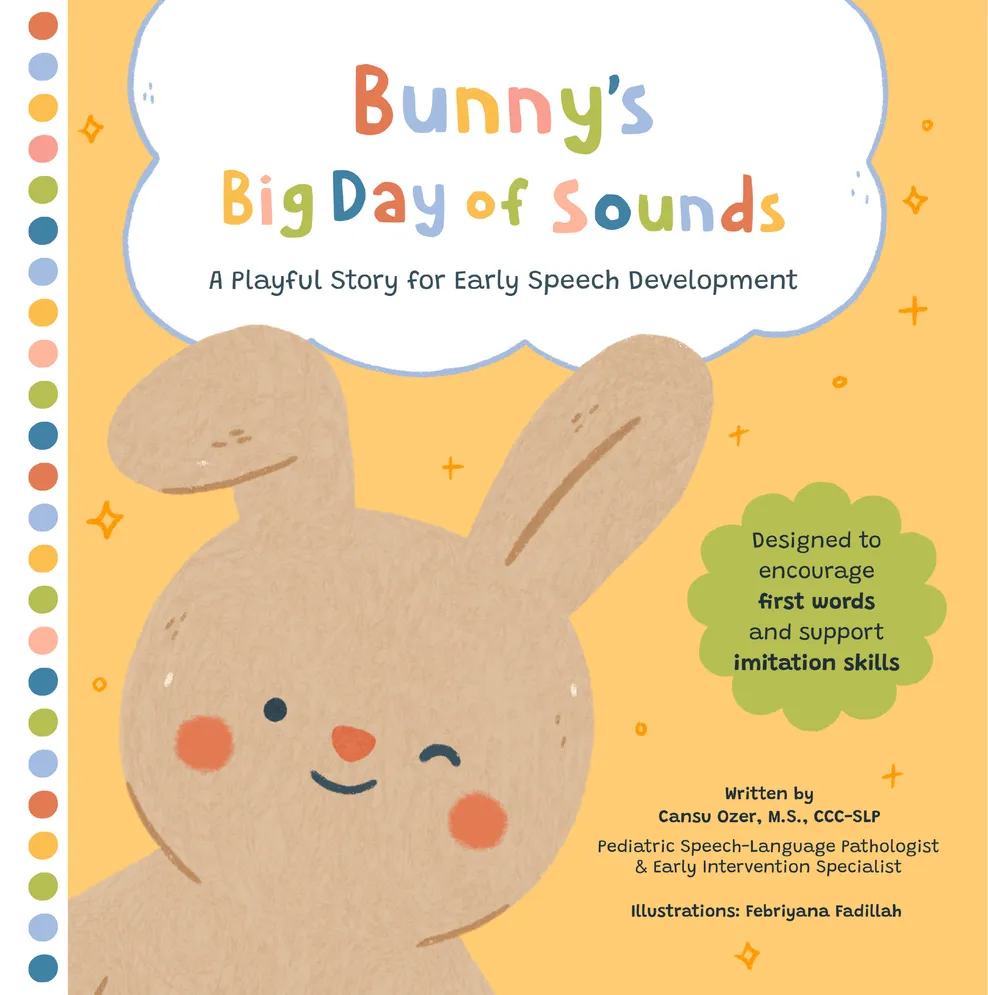
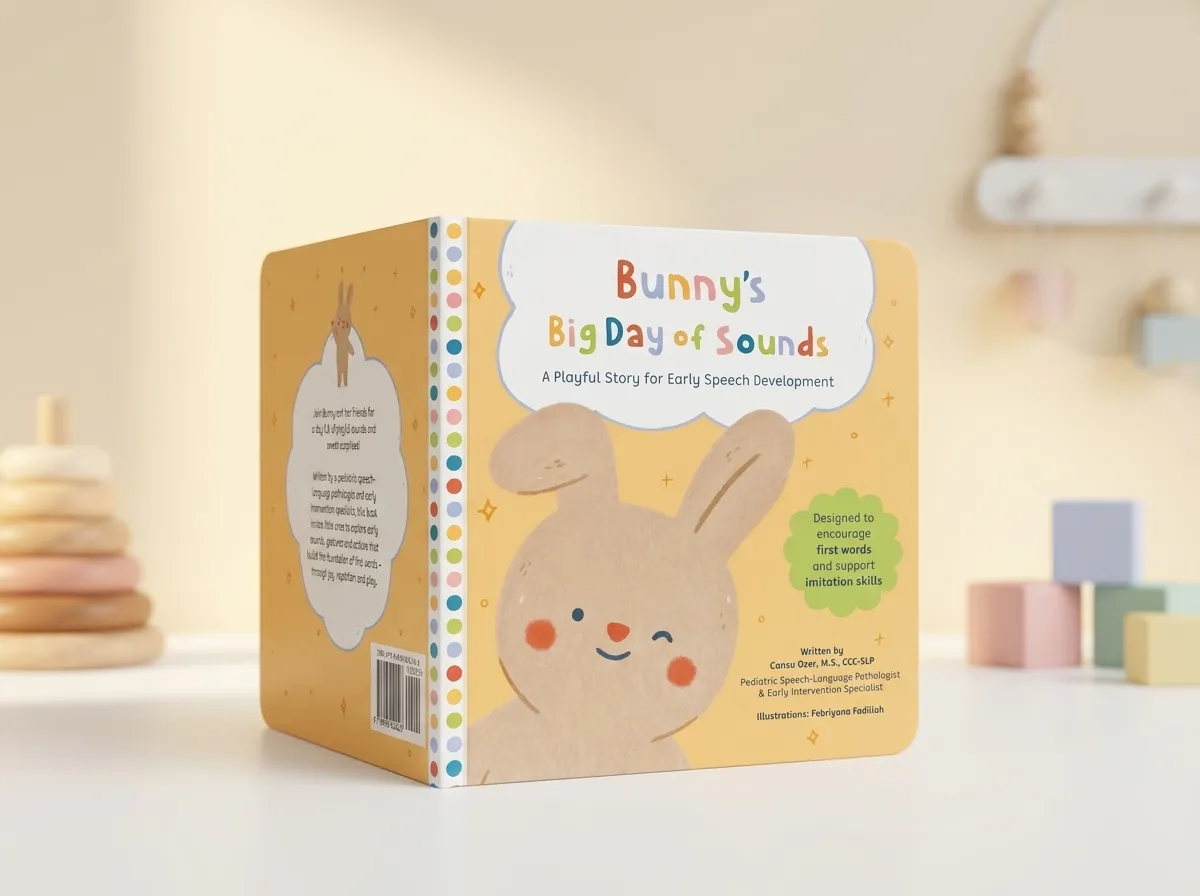
Bunny's Big Day of Sounds
An interactive board book that turns everyday routines — waking up, brushing teeth, playing at the park — into playful opportunities for sound exploration, imitation, and shared conversation.
Written by a pediatric speech-language pathologist, every page invites little ones to see it, hear it, and try it — together with the people who love them.
- Written by
- Cansu Ozer, M.S., CCC-SLP
- Illustrated by
- Febriyana Fadillah
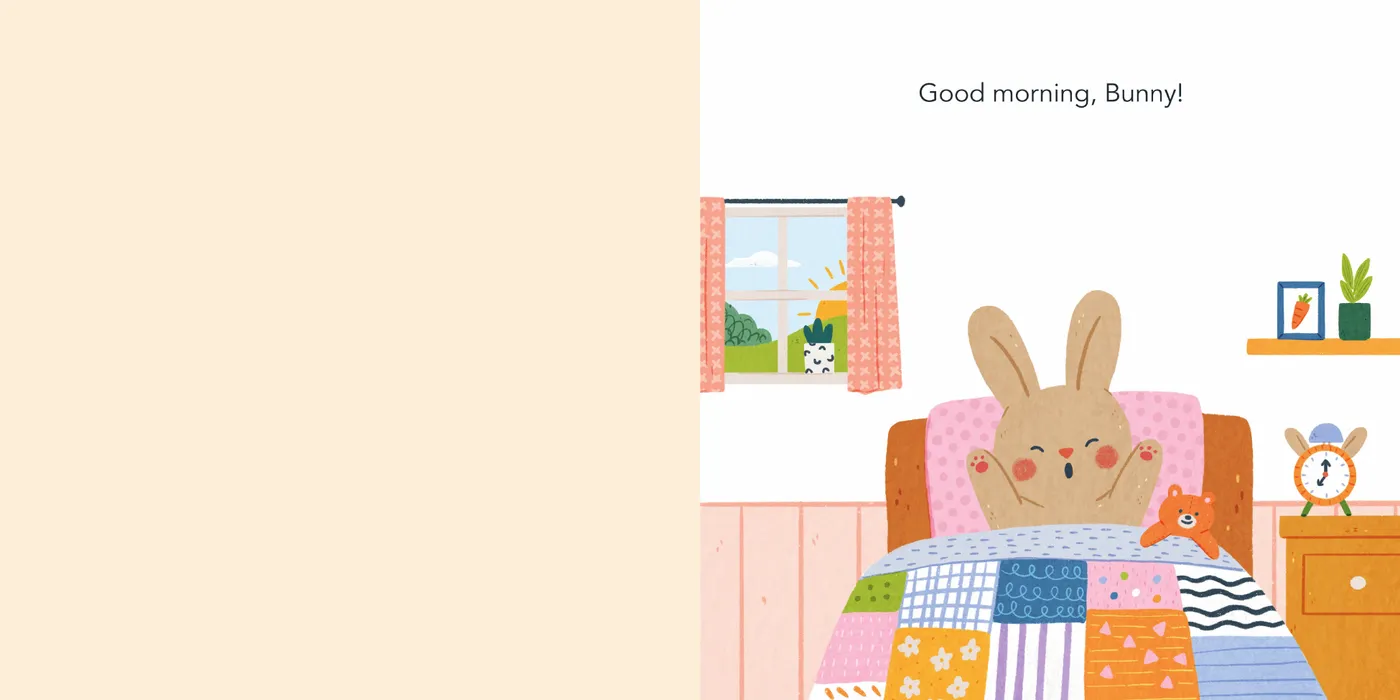
A Peek Inside
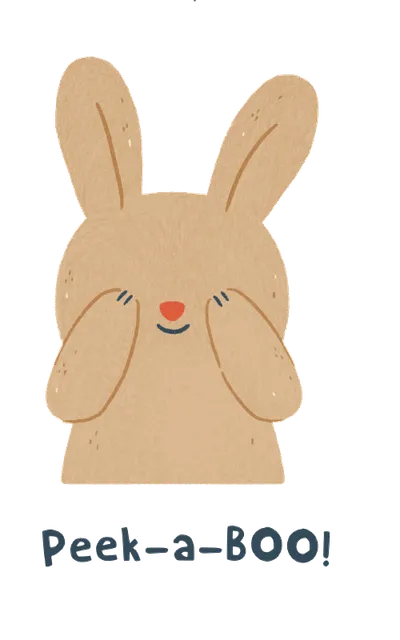
Turn the pages of Bunny's opening spreads — just enough to fall in love with, before you open the book yourself.
How to Read Together
There's no perfect way to read this book. These are gentle suggestions, not rules.
- 1
Follow their lead
If your child wants to stay on one page, or repeat a sound over and over, go with it. Repetition helps them learn and feel confident.
- 2
Keep it playful and engaging
Have fun with it! Use big expression, silly voices, and plenty of excitement. Joy and connection help language grow.
- 3
Use actions and gestures
Act it out together — wave, hop, pretend to lick ice-cream. Movement helps your child connect words with meaning.
- 4
Pause & wait
After you model a word or sound, pause for a moment. This quiet space gives your child time to process and a chance to join in.
- 5
Celebrate attempts
Celebrate every try — a sound, a movement, even a look. Recognizing their effort builds confidence in communicating.
Why Families Love Bunny
Interactive Sound Play
Playful sounds like “brush brush” and “hop hop hop” invite little ones to imitate before they can say real words.
Everyday Routines
Waking up, mealtime, and playtime become natural moments for connection — no flashcards required.
Supports Early Communication
Every page models the building blocks of first words: sounds, gestures, and shared attention.
Shared Storytime
Designed to be read together, out loud, with plenty of room for giggles and repeats.
Written by a Pediatric SLP
Grounded in real early-intervention practice, from a speech-language pathologist and mom.
Made for Repeated Reading
The same page can be a new conversation every time — repetition builds confidence, not boredom.